
For many, the flag symbolizes liberty. Here’s a brief American flag history and explanation of what the stripes, the stars and the colors represent.
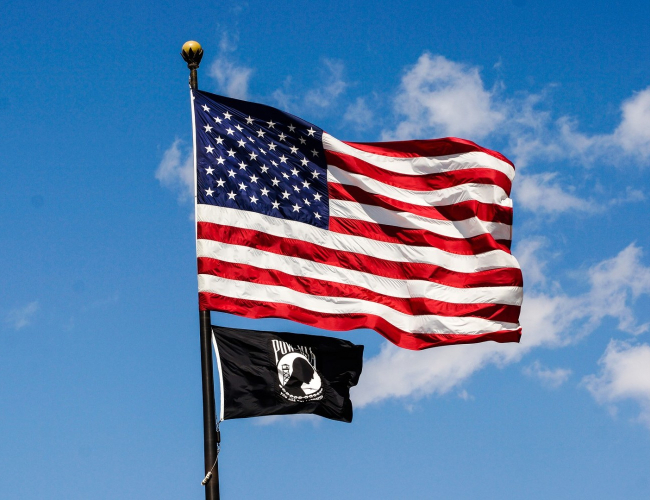
If you grew up attending school in the United States, you probably remember that there was a lesson on how Betsy Ross sewed together the first American flag in 1776. But do you remember exactly what the stripes, the stars and the colors represent? Traditionally a symbol of liberty, the American flag has carried the message of freedom to many parts of the world.
Believe it or not, the colors red, white, and blue didnt have any significance when the flag was adopted in 1777. The Continental Congress actually passed a resolution on July 4, 1776 which authorized a committee to come up with a seal for the United States of America. That committee was instructed to create a design that reflected the Founding Fathers’ beliefs of values and independence for the new Nation. It wasnt until the seal was completed and approved on June 20, 1782 that the national colors and symbols on the American flag had any defined meaning. The explanation for the flags design, taken from a book written by the House of Representatives during that time, is as follows:
* The Stripes – White to denote purity and innocence Red to represent hardiness and valor
* The Field – Blue for vigilance, perseverance and justice
* The Star – A symbol of the heavens and the divine goal to which man has aspired from time immemorial; the stripe is symbolic of the rays of light emanating from the sun.”
In 1777, the number of stripes was congressionally mandated to stand at thirteen to represent the original thirteen colonies, however, designs throughout America still varied greatly. A hero of the War of 1812 and Naval Officer named Samuel Chester Reid got together with New York Congressman Peter H. Wendover in 1818 and initiated a bill to establish uniformity for the design of the American flag. Samuel Reid was the person who actually suggested that stars be added as new states were admitted into the Union. That bill was passed on April 4, 1818. Over the years, there have been twenty-seven versions of the flag. The current design dates to July 4, 1960, when Hawaii became the United States of Americas 50th state.
You should fly your flag from sunrise to sunset, especially on suggested holidays and any additional state and local holidays, but only if weather permits:
New Year’s Day, January 1
Inauguration Day, January 20
Martin Luther King Jr.s Birthday, 3rd Mon in Jan
Lincoln’s Birthday, February 12
Washington’s Birthday, 3rd Mon in Feb
Patriots Day,
Armed Forces Day, 3rd Sat in May
Memorial Day (half-staff until noon), last Mon in May
Flag Day, June 14
Independence Day, July 4th
Labor Day, 1st Mon in Sep
Constitution Day, September 17
Columbus Day, October 12th
Navy Day, October 27
Veterans Day, November 11
Thanksgiving Day, 4th Thu in November.
Finally, you should never throw a flag in the garbage. For information on how to properly dispose of a worn flag, contact your local American Legion hall, VFW chapter or Boy Scout troop.
Check back tomorrow for a brief explanation on why we celebrate Independence Day.
